A park educator or zoological guide helps you read Bioparc as a full ecosystem, not just a list of animals. That matters here because the park’s zoo-immersion design uses hidden barriers, mixed-species views, and landscape cues that are easy to miss without context.
Quick summary
- Guide fee: From €63.02/group
- Group bookings: 20+ visitors
- Visit time: Flexible
- Entry: Date-specific admission
- Re-entry: Not allowed
Why choose a guided tour
Understand the habitats better
Follow the smartest route
Bioparc is manageable in size, but timing still shapes what you see. A guided route helps you start with the open savanna, move into the shaded Equatorial Forest when the day heats up, and slot in Kitum Cave or the Cycle of Life show without backtracking.
Turn a family outing into real learning
Bioparc raises the kinds of questions kids actually ask: Why do hippos stay underwater so long? Why are lemurs so close to the path? A live guide answers in the moment and adapts explanations to the group instead of leaving you to piece everything together from panels.
Go deeper on conservation
Bioparc’s strongest story is not only animal proximity. Guided commentary adds detail on welfare-first enclosure design, breeding programs, and why species like Western lowland gorillas and African elephants need carefully managed habitats, making the visit feel more purposeful than a simple walk-through.
What to expect on a guided tour of Bioparc Valencia

1/6
Meet at the main entrance and get oriented
Most guided visits begin outside the main entrance on Avenida Pío Baroja 3, where tickets are checked before entry. Arrive at least 15 minutes early so the group can start on time, especially if you’re joining a scheduled group visit. Once inside, the pace is relaxed, but the route is designed to cover the park’s headline zones efficiently.
Begin with the African savanna
The first major stop is usually the open savanna panorama near the entrance. This is where Bioparc’s layout makes the strongest first impression, with giraffes, zebras, rhinoceroses, and ostriches visible across a broad landscape, and lions often seen higher up on rocky outcrops beyond the main plain.
Move into the Equatorial Forest
From the open habitats, the route usually shifts into the denser Central African sections. Shadier paths, thicker planting, and quieter viewing points make this a good moment to stop longer with the gorillas and chimpanzees. Guided commentary is especially useful here because behavior, group dynamics, and enclosure design are part of the story.
Cool off in Kitum Cave and the wetlands
Mid-visit, the route often reaches Kitum Cave, one of Bioparc’s most distinctive spaces. The darker, cooler tunnel gives you underwater views of hippos gliding behind the glass, with crocodiles nearby. It’s one of the best examples of how the park uses immersion to change your perspective on familiar animals.
Cross Madagascar and time the show
Later in the route, guides often bring groups through the Madagascar zone, where free-roaming lemurs create one of the park’s closest animal encounters. If timing works, many visits also build around the Cycle of Life amphitheater show, which adds birds of prey, small mammals, and conservation storytelling to the day.
Stay after the guided portion ends
Guided visits usually cover the main logic of the park first, then leave you free to revisit favorite areas on your own. Many visitors return to the savanna viewpoints, spend longer with the elephants by the baobab waterfall, or stop for lunch inside the park before heading out. Once you leave, re-entry is not permitted.
Highlights covered on the tour

African savanna panorama
Location: Main savanna zone, near the entrance
See giraffes, zebras, rhinoceroses, and ostriches across one continuous landscape, with lions visible from rocky vantage points beyond.

Things to keep in mind when you go on a tour
- Parking: On-site parking is available beside the park for around €7 per day, with stays of up to 10 hours.
- Dining terrace: On-site food is useful because outside food is not allowed inside the park, and re-entry is not permitted.
- Gift shop: Near the exit, the shop is the easiest stop for souvenirs after you finish the route.
- Parque de Cabecera: The green park next door is useful before or after your visit if you want open space without using your admission time.
- Photo ID: Bring valid ID, especially if you’re using a reduced ticket or joining a pre-booked visit that may require name matching.
- Sun protection: Much of Bioparc is outdoors, and the open savanna areas feel especially exposed in warmer months.
- Insect repellent: Wetland landscaping and humid planted areas can mean mosquitoes, especially in hotter parts of the year.
- Comfortable walking shoes: Most visitors spend 3–4 hours moving through a 10-hectare park rather than standing in one building.
- Prohibited items awareness: Outside food, pets, and anything used to feed or disturb animals should be left out of your day plan.
- Do not feed or disturb animals: Hitting glass, throwing objects, or trying to attract animals is not allowed anywhere in the park.
- No re-entry once you leave: Plan meals and breaks carefully because the same ticket cannot be used to come back in.
- Smoking is restricted: Smoke only in designated smoking areas.
- Children need supervision: Visitors under the age of 14 must be accompanied by an adult.
- Follow walkway instructions: In immersive zones like Madagascar, staff instructions matter because animals move close to visitor paths.
- Start early for the savanna: Morning light and cooler temperatures usually make the open habitats easier to enjoy and photograph.
- Use midday for Kitum Cave: The cave and wetter habitats feel cooler when Valencia’s outdoor heat peaks.
- Check the show time on arrival: The Cycle of Life presentation is easiest to fit in when you plan around it from the start.
- Allow extra travel time in summer: Traffic around Bioparc can build late in the morning, especially on weekends and school holidays.
- Eat before entry if you want outside food: Because outside food is not allowed inside and re-entry is not permitted, lunch planning matters here more than at many city attractions.
- Wheelchair access: Main visitor routes are wheelchair accessible, with wide paths and ramps across the park.
- Guide dogs: Guide dogs are allowed with the required documentation.
- Public transport access: EMT buses stop close to the entrance, and Nou d’Octubre metro station is about a 10-minute walk away.
- Arrival by car: On-site parking makes access easier for visitors who prefer to avoid the walk from public transit.
Frequently asked questions about Bioparc Valencia guided tours
It depends on how you like to visit animal parks. Entry-only works well if you want to linger independently, while a guided visit is better if you want live context on enclosure design, conservation, and animal behaviour — especially in zones like Kitum Cave, the Equatorial Forest, and Madagascar.
Most guided visits cover the main highlights in about 1–2 hours, depending on format. Visitors usually stay 3–4 hours in total, so the guided portion acts as a structured introduction rather than your entire day inside the park.
Spanish is the most standard language for guided visits. English is often available on request, and other languages may be possible for private or organized group bookings, usually at a higher guide fee than the base Spanish-language option.
Guided visits are usually led by a park educator or zoological guide rather than a generic city host. The value here is interpretation of habitats, animal behavior, welfare-first design, and conservation context specific to Bioparc’s African ecosystems.
Yes. It works especially well for children because the park is compact enough to manage, the lemur island creates close-range excitement, and the Cycle of Life show breaks up the walking. A guided visit can help if your children ask lots of questions and engage better with live explanation.
Plan for several hours on foot. Most visitors spend 3–4 hours moving through the 10-hectare park, with regular stops for viewing, shows, and breaks, so this is more walking than a short indoor museum visit.
Yes, in most cases you can continue exploring after the guided portion if your admission is valid for the day. That gives you time to revisit the savanna, watch the elephants longer, or see the Cycle of Life show if it was not part of the guided route.
Late arrival matters more for guided visits than for standard admission. Bioparc Valencia tickets use timed entry windows, and organized guided routes cannot usually restart from the beginning, so arriving at least 15 minutes early is the safer plan.
No. Bioparc tickets are single-entry, so once you leave, you cannot return with the same ticket. This is one of the biggest practical points to plan around before your visit.
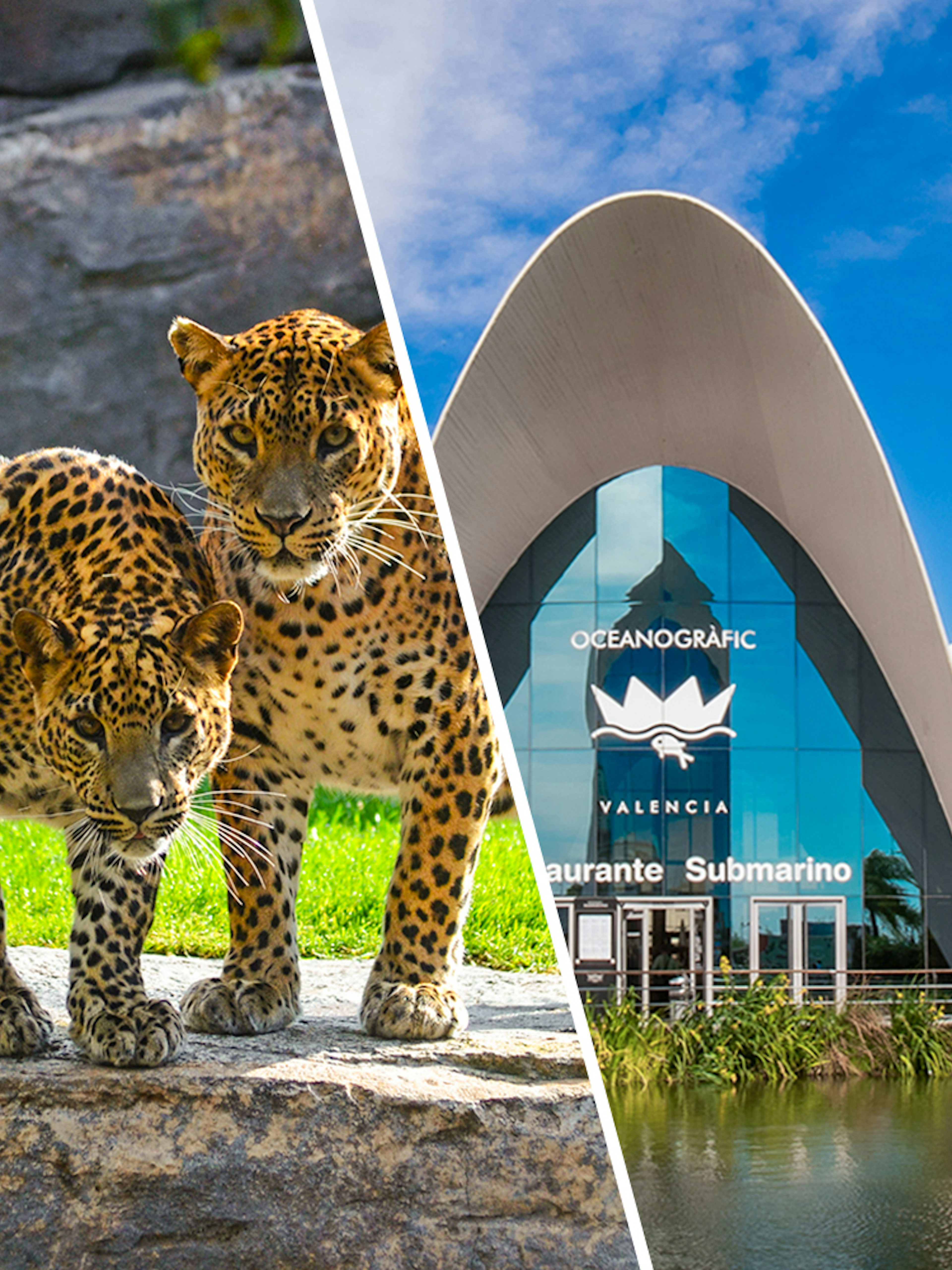
Yes. You can book Bioparc Valencia and Oceanographic tickets and save 8%. These are useful if you want wildlife plus a second attraction without booking separately.
Booking ahead is sensible on weekends, Easter, and during July and August, when family travel is highest. Even when same-day entry is available, online booking is usually smoother because you avoid the on-site ticket line.
Outside food is not allowed inside Bioparc. Because you also cannot exit and re-enter, decide before arrival whether you want to eat on-site or have a meal before you go in.
Yes, the park is generally accessible. Main paths are wheelchair-friendly, guide dogs are allowed with documentation, and public transport or on-site parking makes arrival fairly straightforward for visitors who want to avoid longer city walks.