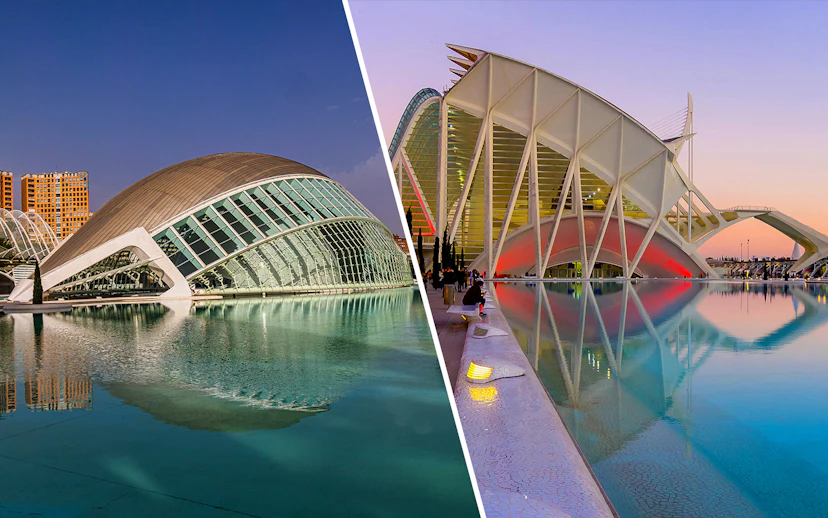
- Official name: Ciutat de les Arts i les Ciències / City of Arts and Sciences
- Location: Former Turia riverbed, Valencia, Spain (Google Maps: ‘Ciutat de les Arts i les Ciències’)
- Category: Cultural, scientific, and entertainment complex
- Opened: In phases from 1998–2009
- Size: 350,000+ sq m (3.8m+ sq ft), stretching roughly 2km (1.2 mi)
- Main styles: Neo-Futurist, Structural Expressionist, and organic, nature-inspired design
- Lead architect: Santiago Calatrava
- Additional architect: Félix Candela, designer of L’Oceanogràfic
- Headline fact: The complex includes Europe’s largest aquarium and Valencia’s most recognizable modern skyline
City of Arts and Sciences Architecture: Calatrava’s white concrete forms and mirror-like pools
Few urban ensembles feel as cinematic as the City of Arts and Sciences in Valencia. Set in the former Turia riverbed, this long sequence of white concrete, steel, glass, and water reflections turns a cultural complex into a sculptural landscape. Santiago Calatrava shaped most of its signature buildings, while Félix Candela designed the distinctive forms of L’Oceanogràfic. Together, they created a place where engineering is always visible, and where an opera house, science museum, IMAX dome, and aquarium each speak a different architectural language. For anyone curious about City of Arts and Sciences Valencia architecture, the fascination starts before you step inside.
City of Arts and Sciences architecture page guide
{jumplink target="Quick overview of the architecture of City of Arts and Sciences" text="Quick overview"}
{jumplink target="Architectural style(s) & influences" text="Styles & influences"}
{jumplink target="Architectural highlights of City of Arts and Sciences / Design highlights & iconic features" text="Highlights"}
{jumplink target="9. Who designed/built City of Arts and Sciences?" text="Who designed it?"}
{jumplink target="History of City of Arts and Sciences’ architecture / Stages of construction" text="History"}
{jumplink target="The exterior of City of Arts and Sciences" text="Exterior"}
{jumplink target="The interior of City of Arts and Sciences" text="Interior"}
{jumplink target="Best City of Arts and Sciences tickets and tours to explore City of Arts and Sciences architecture" text="Tickets & tours"}
{jumplink target="Frequently asked questions about City of Arts and Sciences’ architecture" text="FAQs"}
Quick overview of the architecture of City of Arts and Sciences
Architectural style(s) & influences
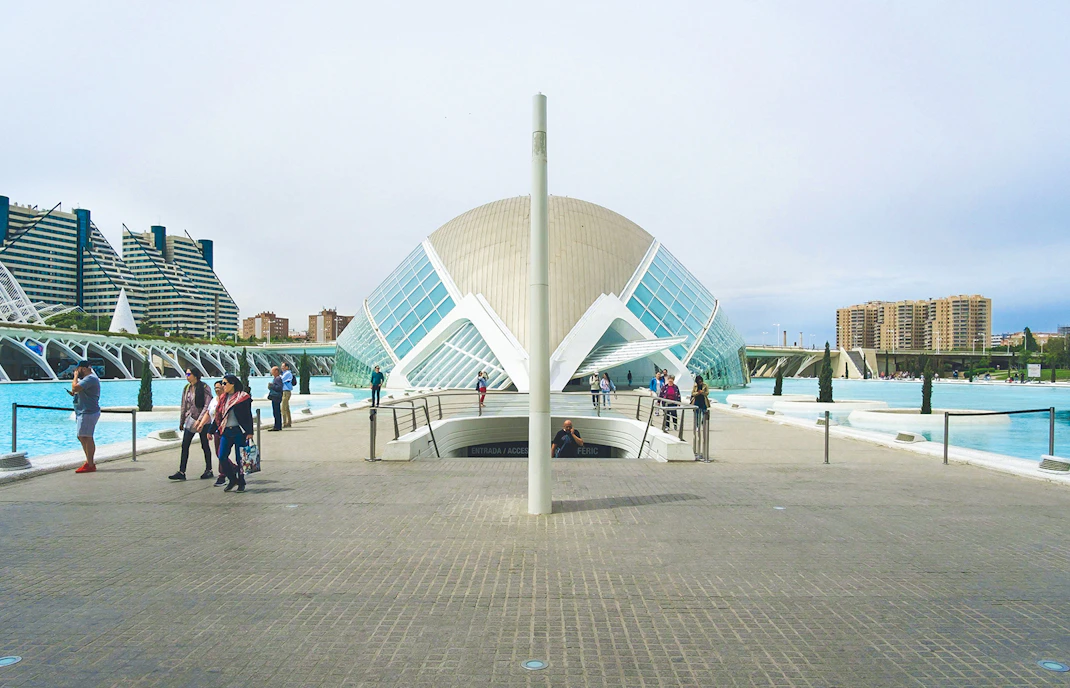
The complex is best understood as Neo-Futurist architecture — a forward-looking style that uses sweeping forms, visible engineering, and a sense of motion to imagine the future. It also draws on Structural Expressionism, meaning the structure itself becomes part of the visual drama rather than being hidden behind decoration. At the City of Arts and Sciences, ribs, arches, shells, and spans are the ornament.
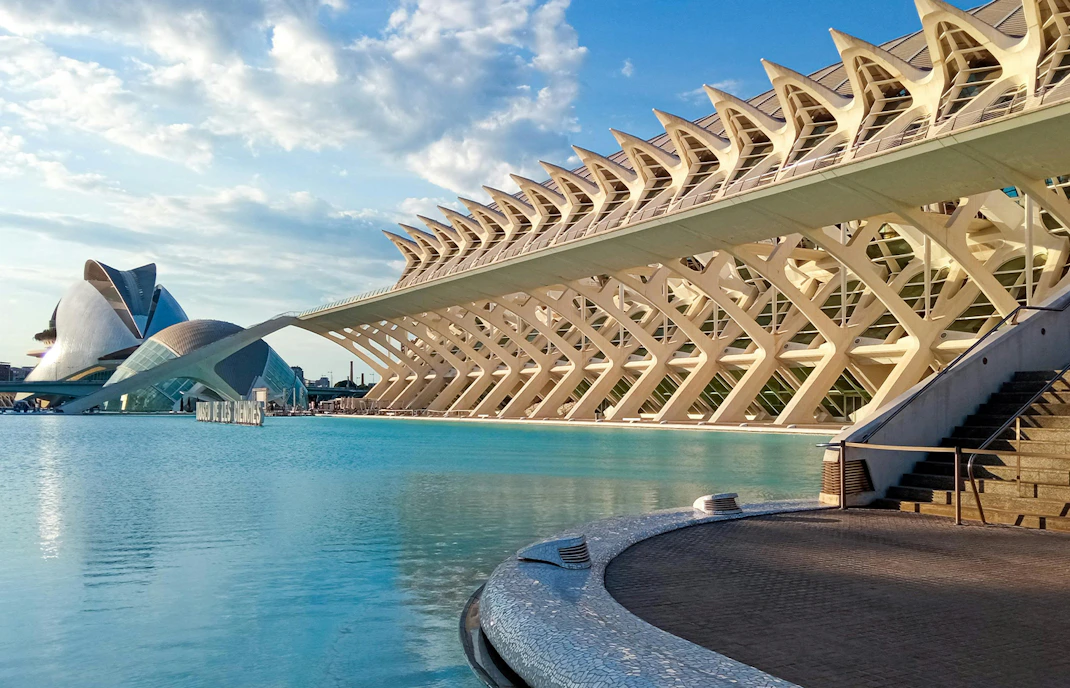
Calatrava’s buildings often feel like giant skeletal forms, bridges, or creatures paused in motion. Candela’s Oceanogràfic introduces thinner, lower shell structures that resemble water lilies. White concrete, glass walls, steel elements, and reflective pools tie everything together. In person, you notice how the eye-shaped Hemisfèric, the ribbed Science Museum, and the soaring Palau de les Arts each reveal their idea immediately, even before you read a sign.
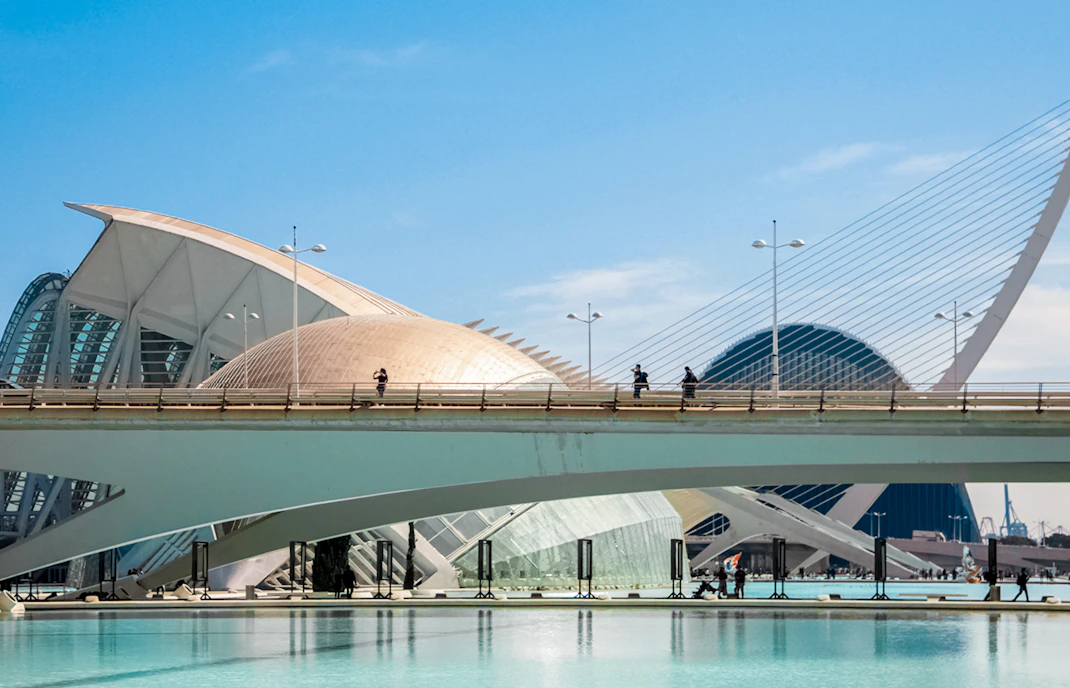
Hemisfèric and reflecting pool
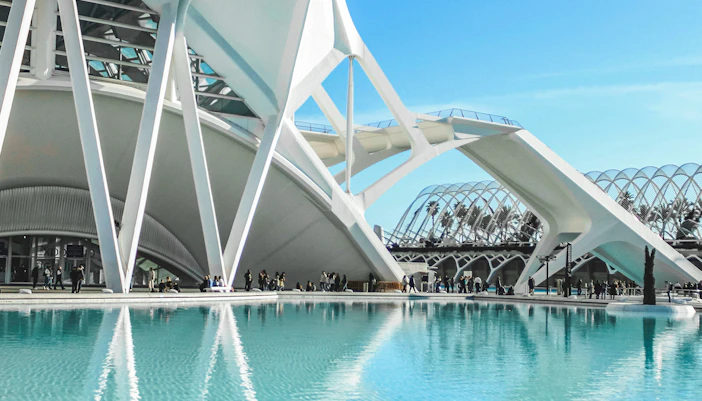
The eye-shaped Hemisfèric seen from across the shallow pool, with its full reflection completing the oval form.
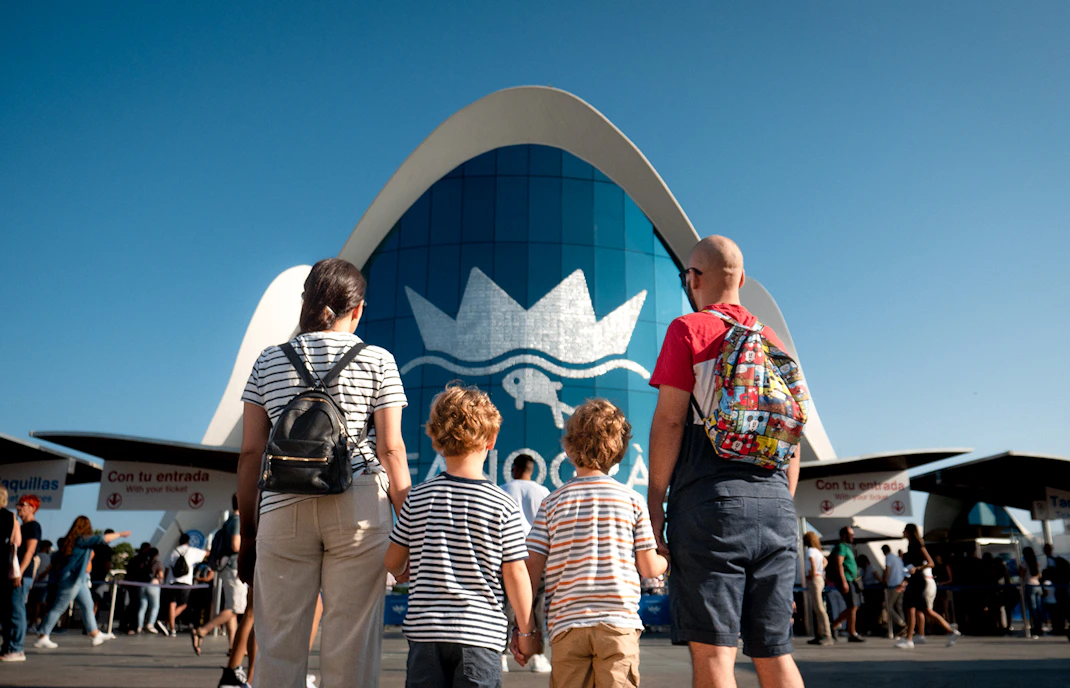
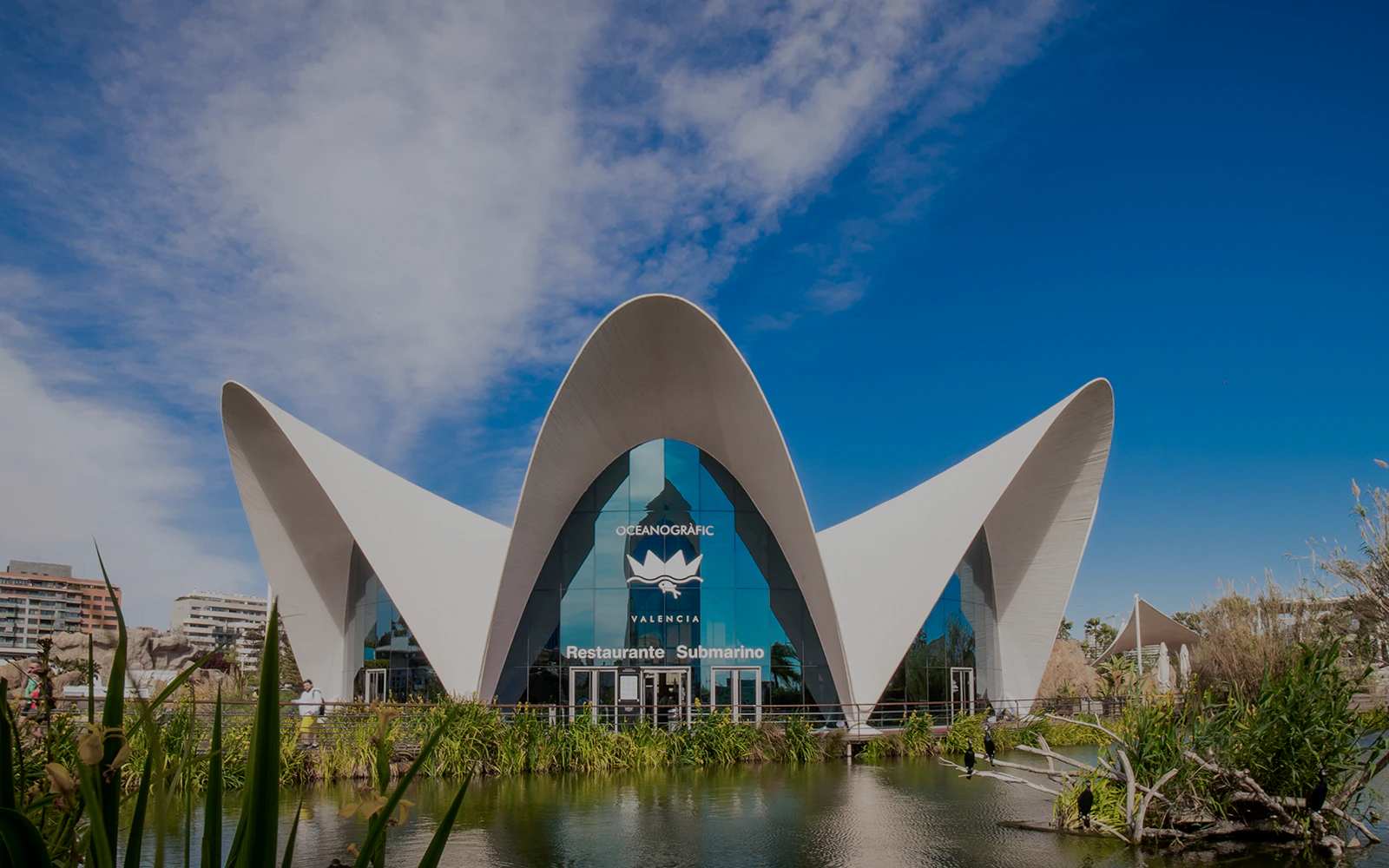
Oceanogràfic shell roofs
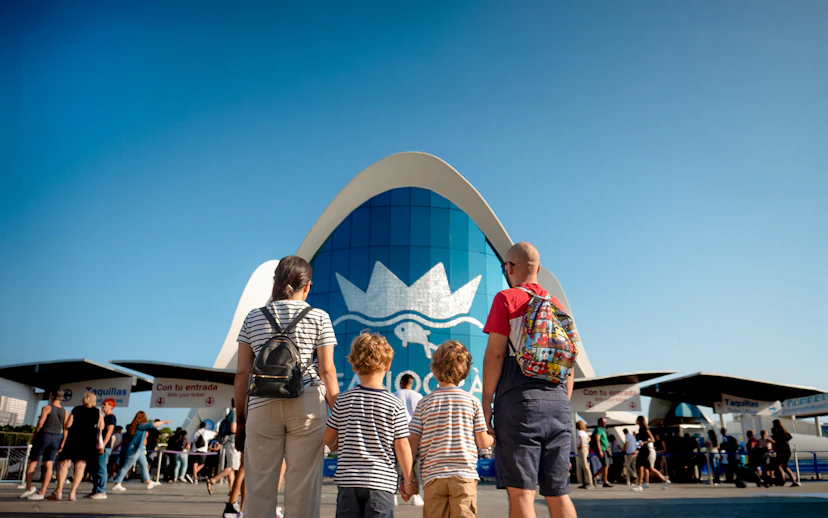
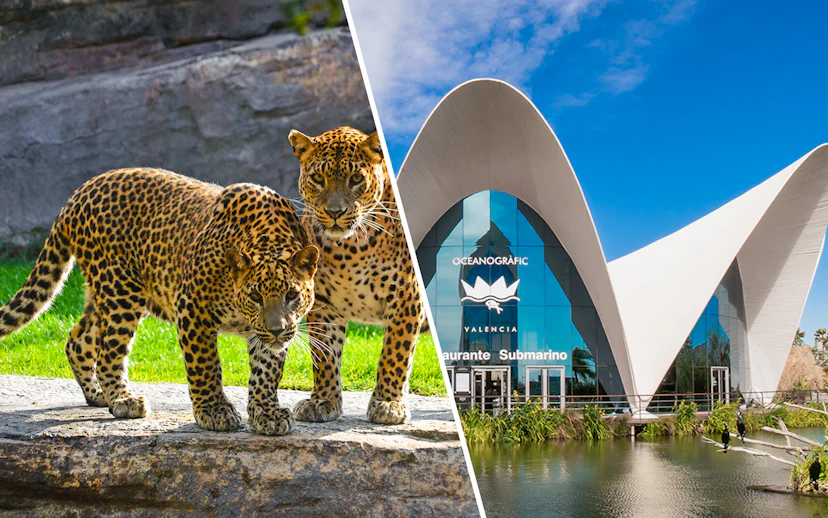
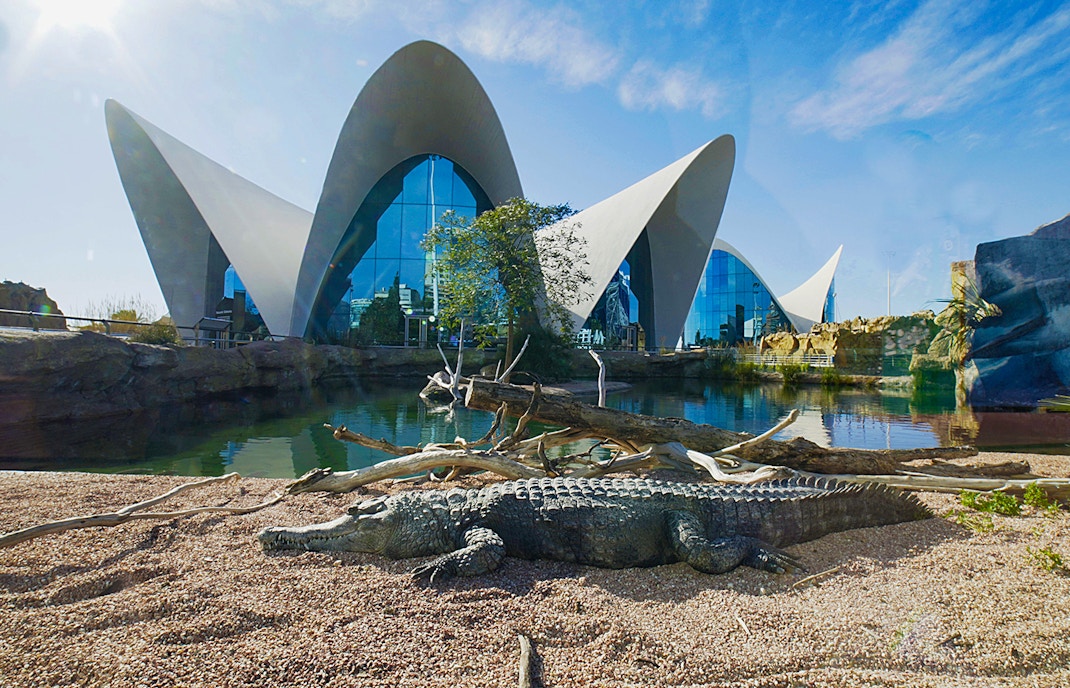
Félix Candela’s water-lily-like concrete shells rising above the aquarium buildings against a bright Valencia sky.
Architectural highlights of City of Arts and Sciences / Design highlights & iconic features
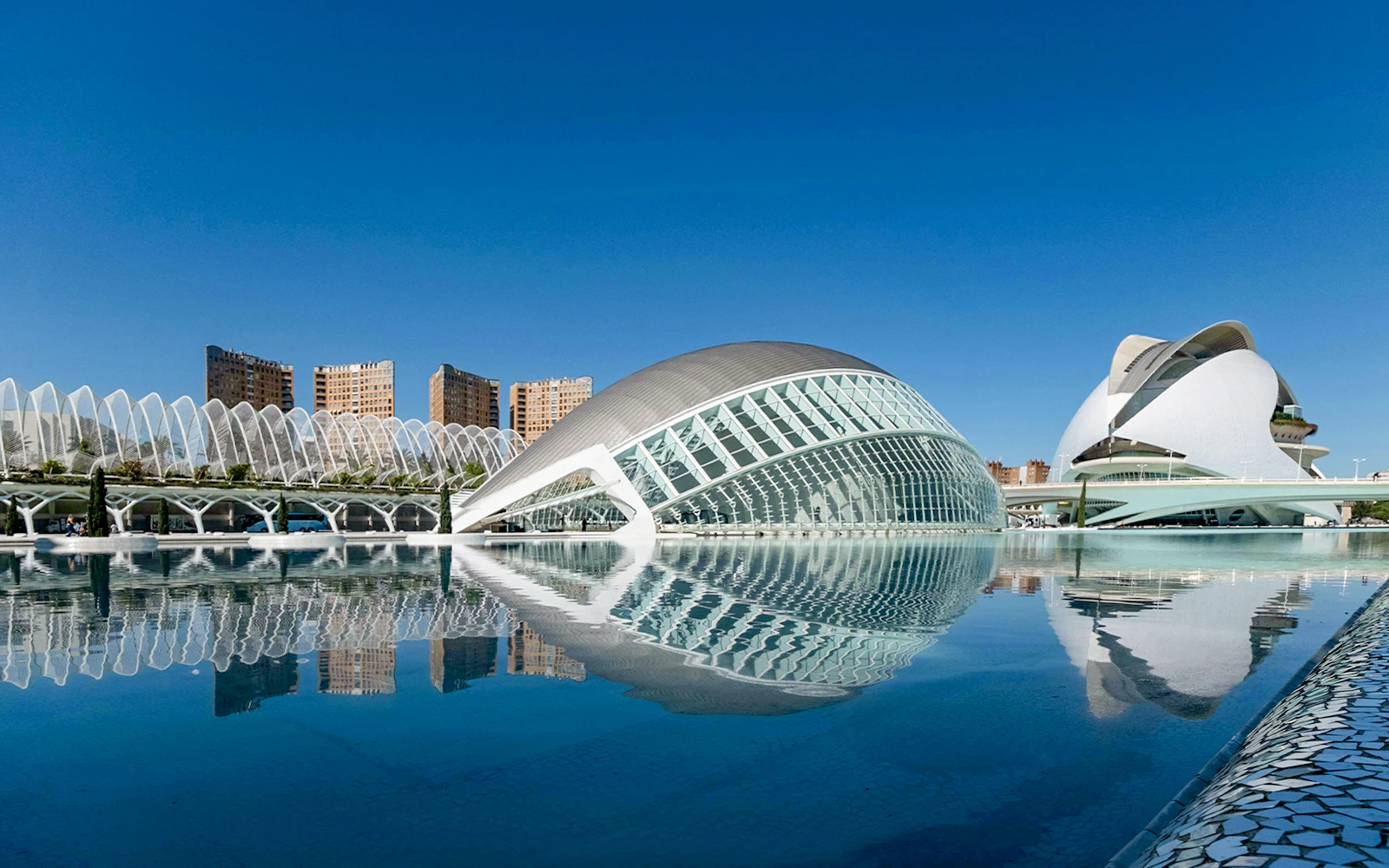
Hemisfèric
The complex’s symbolic eye sits in a pool, so the building and its reflection read as one complete form — part planetarium, part sculpture, and endlessly photogenic.
Santiago Calatrava
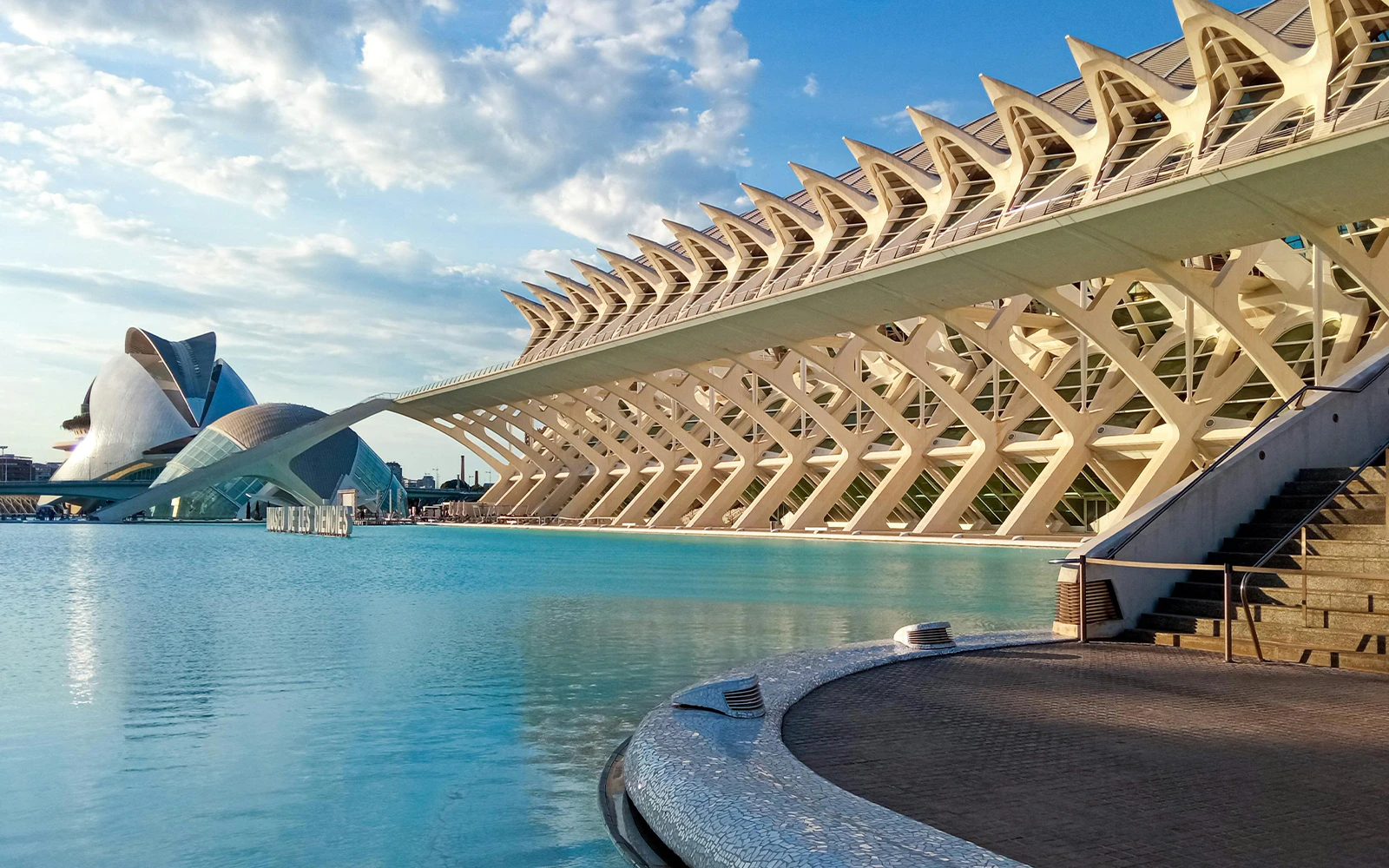
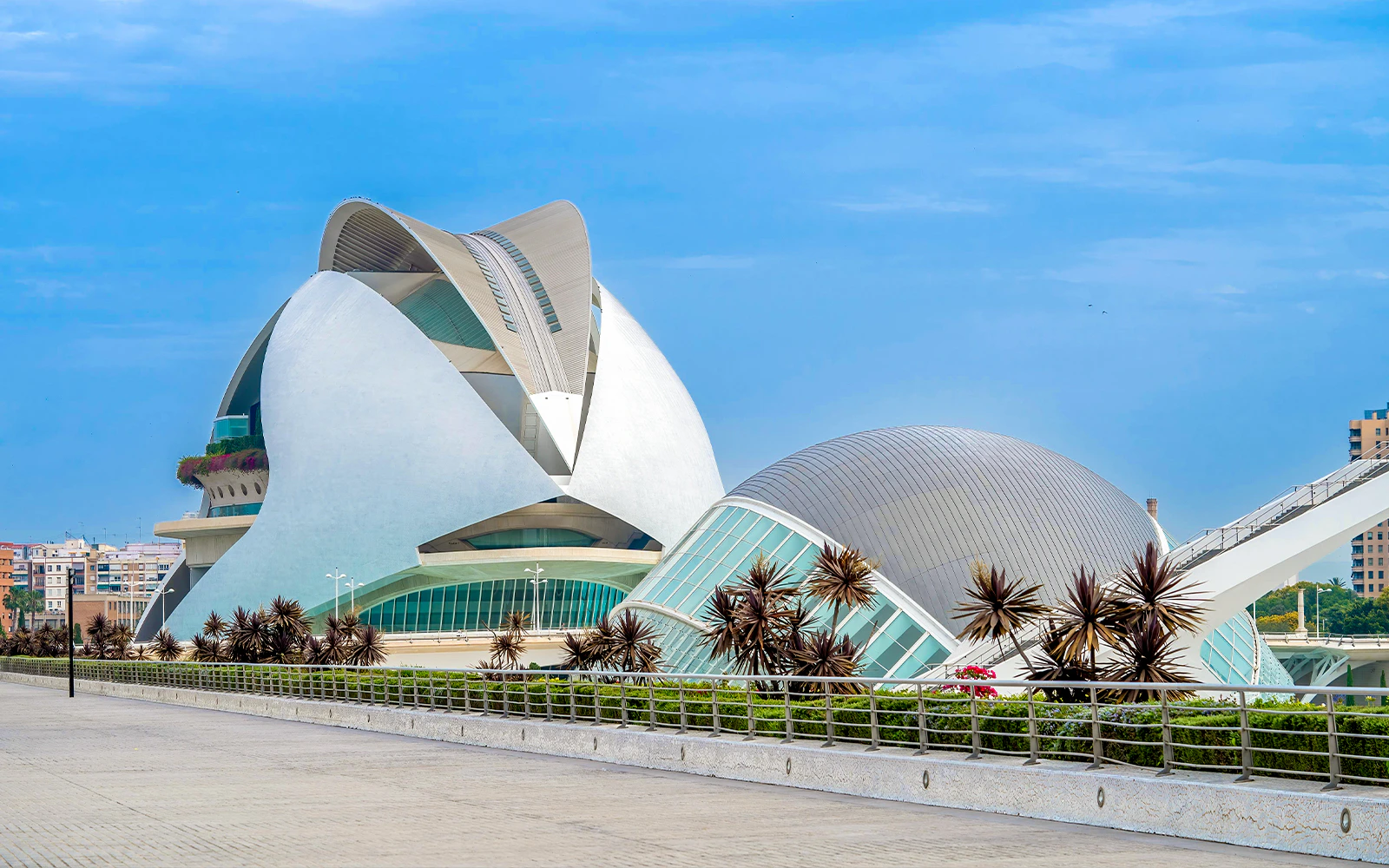
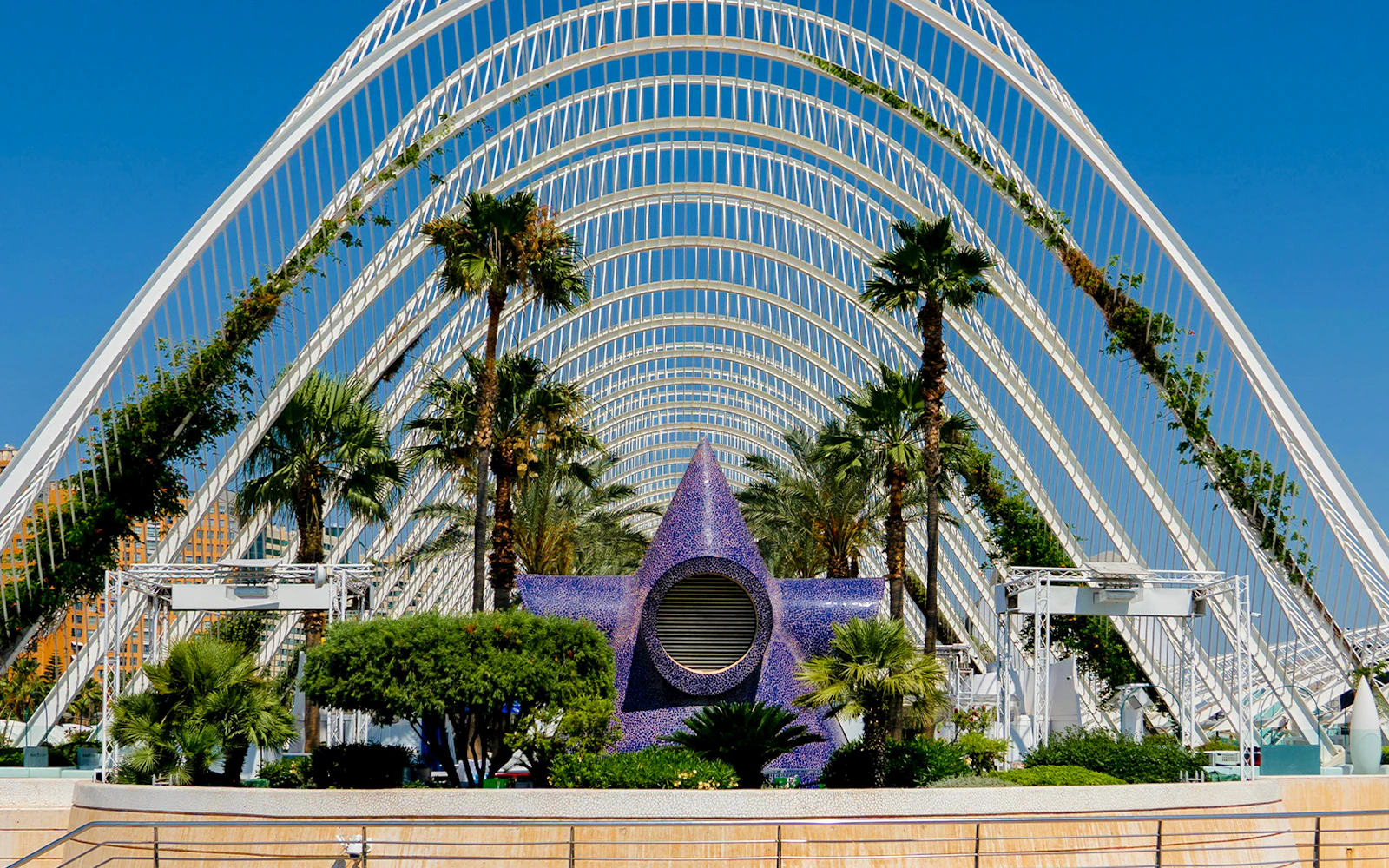
Architect and engineer Santiago Calatrava designed the masterplan and most of the complex’s landmark buildings, including the Hemisfèric, Science Museum, L’Umbracle, Palau de les Arts, and Ágora. His work gives the site its unmistakable language of ribs, arcs, and motion.
Félix Candela
Spanish-Mexican architect and engineer Félix Candela designed L’Oceanogràfic. His thin-shell concrete expertise brought a lighter, more organic counterpoint to Calatrava’s larger sculptural gestures.
From riverbed to vision
The project grew from a major urban transformation. After the Turia River was diverted following the devastating 1957 flood, Valencia was left with a long former riverbed cutting through the city. In the late 1980s and early 1990s, regional leaders backed a new cultural complex here, and Santiago Calatrava developed a bold scheme that treated the site as both architecture and public landscape.
The first phase
L’Hemisfèric opened in 1998 as the complex’s first completed building and immediately established its futuristic identity. The Príncipe Felipe Science Museum and L’Umbracle followed in 2000, extending the visual axis and pedestrian route through the site.
Expansion and completion
L’Oceanogràfic opened in 2003, bringing Félix Candela’s shell structures into the composition. The Palau de les Arts Reina Sofía followed in 2005, adding a major performance venue, while Ágora arrived later, opening in 2009 as another large civic volume.
Repairs and conservation
Like many ambitious contemporary landmarks, the complex has required ongoing maintenance. Palau de les Arts underwent significant exterior cladding interventions after façade issues were identified, showing how complex design and long-term preservation often go hand in hand.
Read more in this guide to the history of City of Arts and Sciences.
The exterior of City of Arts and Sciences
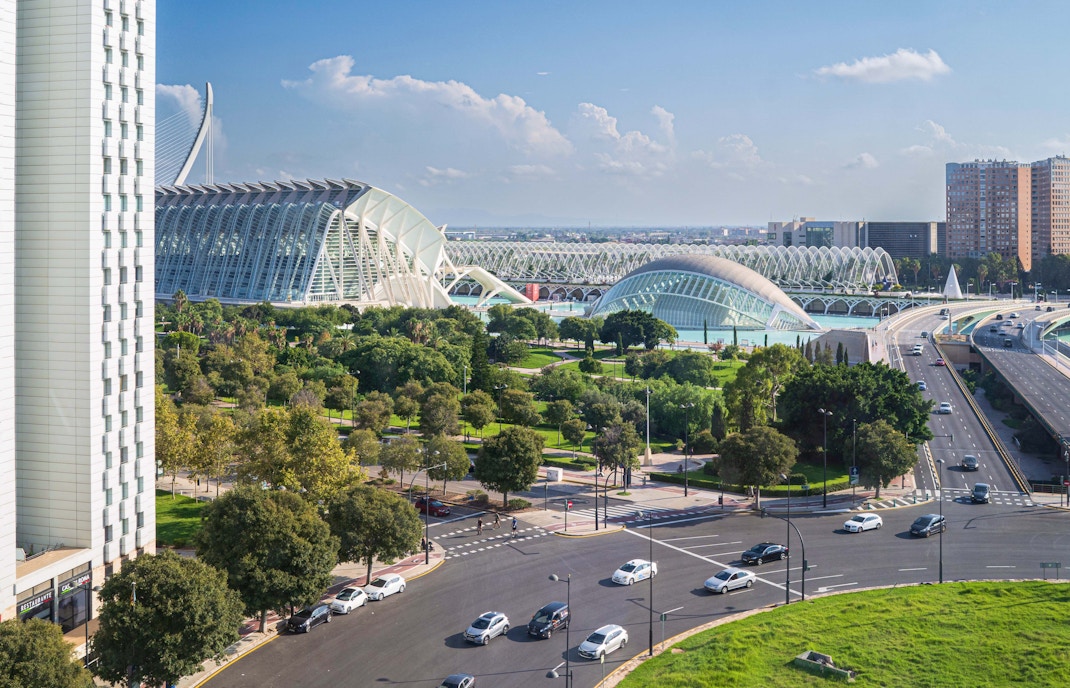
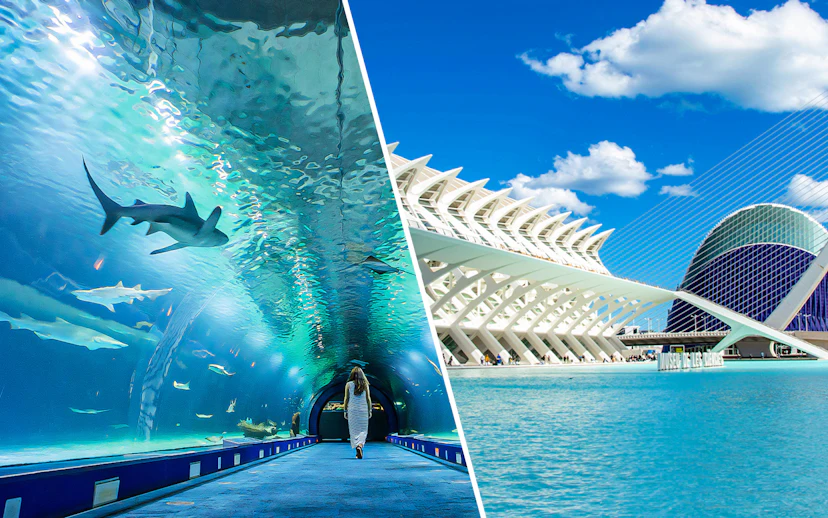
From the Turia Gardens, the complex doesn’t read like a single building. It unfolds as a sequence of white forms set along water, bridges, and broad pedestrian platforms. At a distance, the silhouettes do most of the work: the Hemisfèric’s eye, the Science Museum’s skeletal length, the opera house’s sharp crest, and the low shells of Oceanogràfic. The shallow pools are not decorative afterthoughts; they double the architecture and make the space feel wider, calmer, and more theatrical.
As you move closer, the materials become clearer: smooth white concrete, steel edges, large glazed surfaces, ceramic finishes, and carefully controlled shadows. Bridges and ramps choreograph your approach, so you’re always seeing buildings from oblique angles rather than flat-on. Exterior conservation is part of the story too, especially at Palau de les Arts, where façade repairs have highlighted the challenges of maintaining such technically ambitious forms. Arriving on foot, you get the sense of entering a designed landscape rather than a conventional museum district.
The interior of City of Arts and Sciences
Hemisfèric
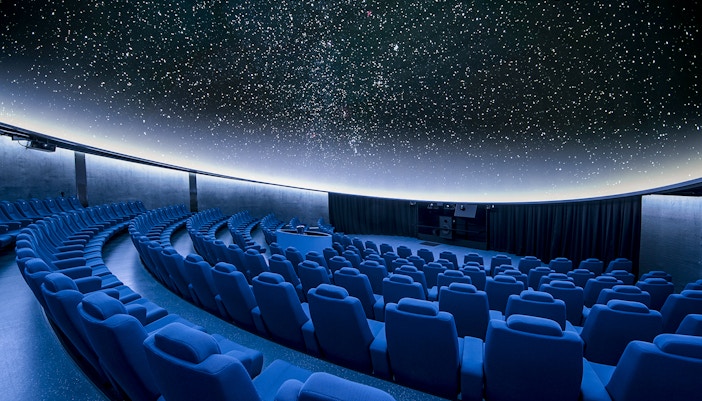
Inside the Hemisfèric, the bright exterior gives way to a dark, controlled auditorium where the concave screen becomes the dominant architectural surface. The interior is less about ornament and more about immersion, with the room shaped entirely around viewing and sound.
Science Museum
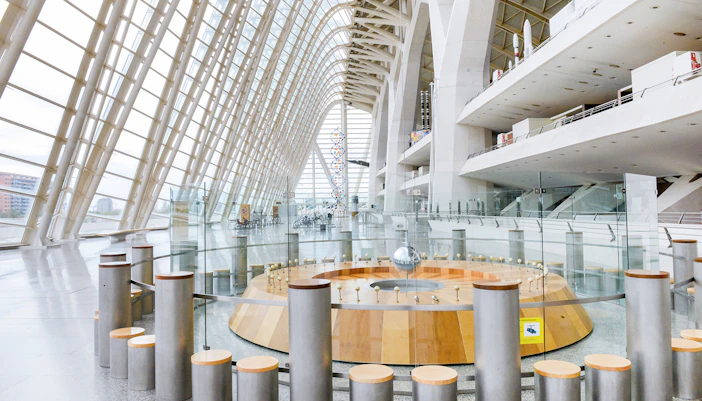
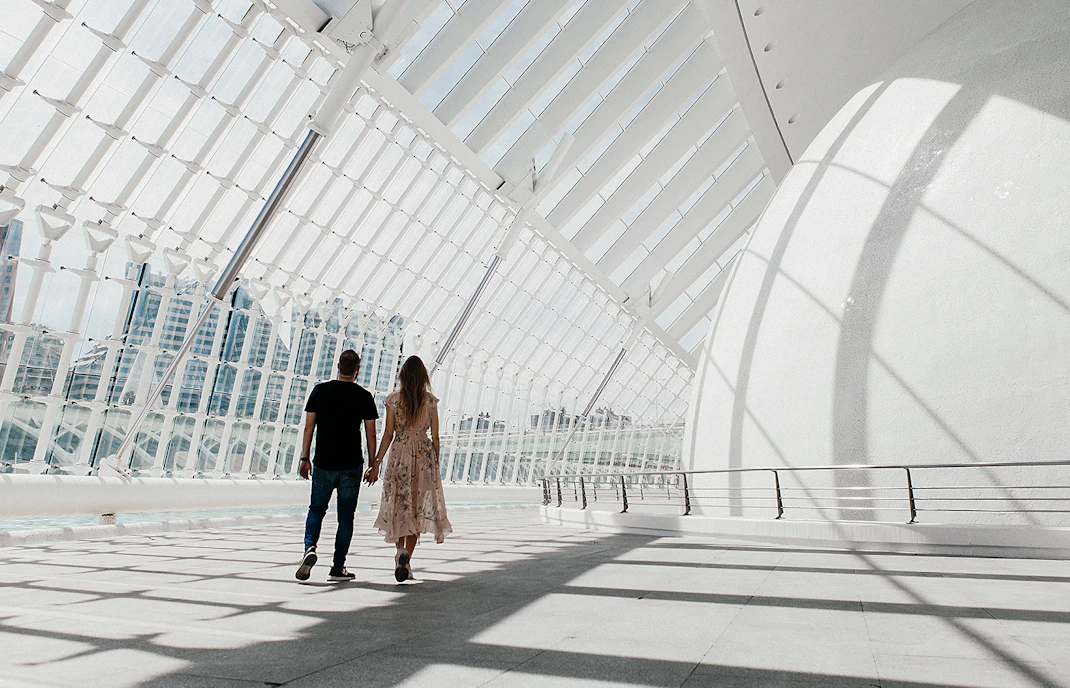
The Príncipe Felipe Science Museum feels like a cathedral of structure. Its tall atrium, exposed ribs, bridges, and long sightlines create a sense of movement even before you reach the exhibits. Daylight filters through glass and framing members, so the building itself feels educational — almost like a lesson in engineering.
Palau de les Arts and Oceanogràfic
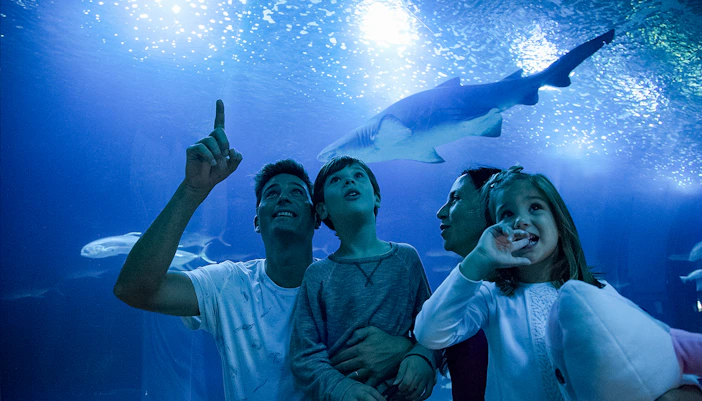
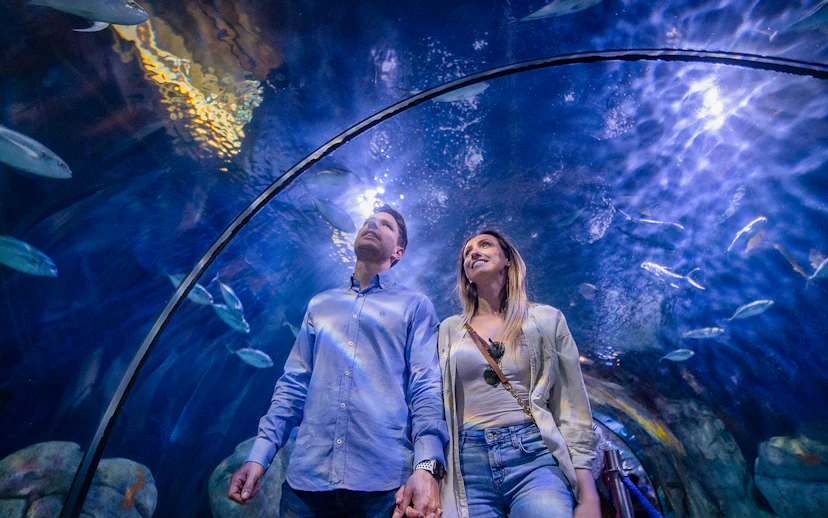
At Palau de les Arts, the interior shifts toward dramatic foyers, layered circulation, and performance-focused acoustics. Oceanogràfic offers a different experience altogether: darker underwater passages, curved viewing windows, and tunnel spaces that make architecture serve atmosphere. Together, these interiors show how the complex moves from civic monumentality outside to highly specific sensory environments within.
For a deeper room-by-room look, explore our guide to what’s inside City of Arts and Sciences.
Frequently asked questions about City of Arts and Sciences’ architecture
Its power comes from treating an entire cultural complex as one sculptural composition. White concrete, steel, glass, bridges, and reflecting pools connect each building, while the forms themselves — eye, skeleton, shell, plume — are bold enough to read instantly.
Start with the Hemisfèric, the Science Museum, and Palau de les Arts for Calatrava’s signature language. Add Oceanogràfic for Félix Candela’s lighter shell design, and walk through L’Umbracle for one of the best elevated views across the whole ensemble.
Not entirely. Calatrava designed most of the landmark buildings and the site’s overall visual identity. Félix Candela designed L’Oceanogràfic, whose low shell roofs give that part of the complex a distinct, more fluid architectural character.
White concrete is the dominant material, supported by steel framing, large glass surfaces, and ceramic finishes. At Oceanogràfic, thin-shell concrete is key. Climate response appears through shaded walks like L’Umbracle, water-cooled visual spaces, and carefully staged outdoor circulation.
Yes. Much of the exterior experience is visible from public walkways, bridges, and garden paths, so you can appreciate the masterplan, reflections, and major forms without entering every venue. Tickets add value when you want the interior spatial experience.
Sunrise and early morning usually offer softer light, fewer people, and calmer reflections. Blue hour is excellent for the illuminated pools. For strong overview shots, try L’Umbracle, the bridges near Palau de les Arts, and the pool edges facing the Hemisfèric.
The site is generally easy to navigate thanks to broad paths, ramps, elevators, and step-free circulation at major venues. For a shorter architecture-focused visit, Hemisfèric Tickets or Combo: Hemisfèric + Science Museum Tickets work well. For a fuller day, Combo: Oceanogràfic + Science Museum + Hemisfèric Tickets gives you Calatrava and Candela interiors in one plan.